 English
 Spanish
 French
 German
 Italian
 Chinese (Simplified)
 Japanese
 Korean
 Arabic
 Portuguese
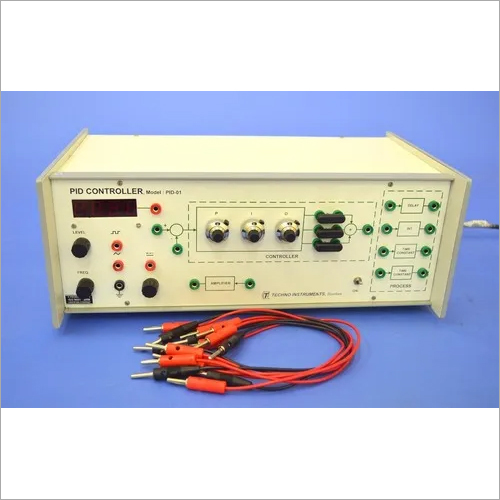
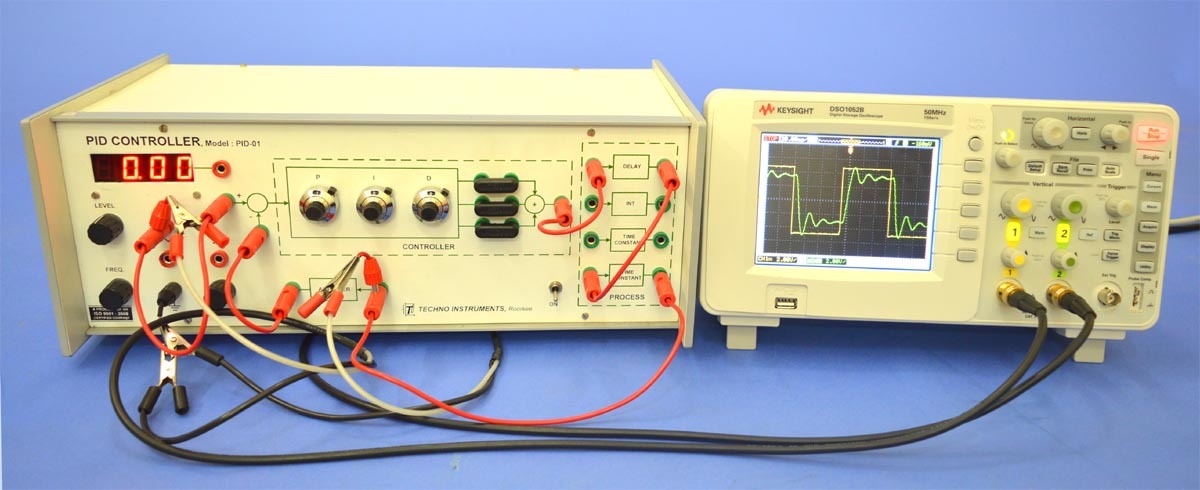
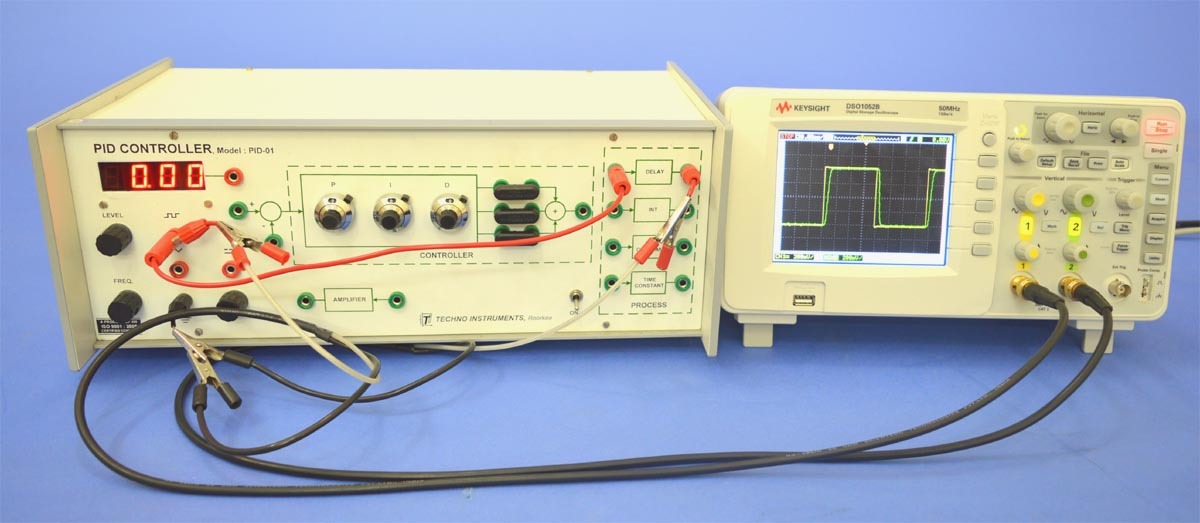
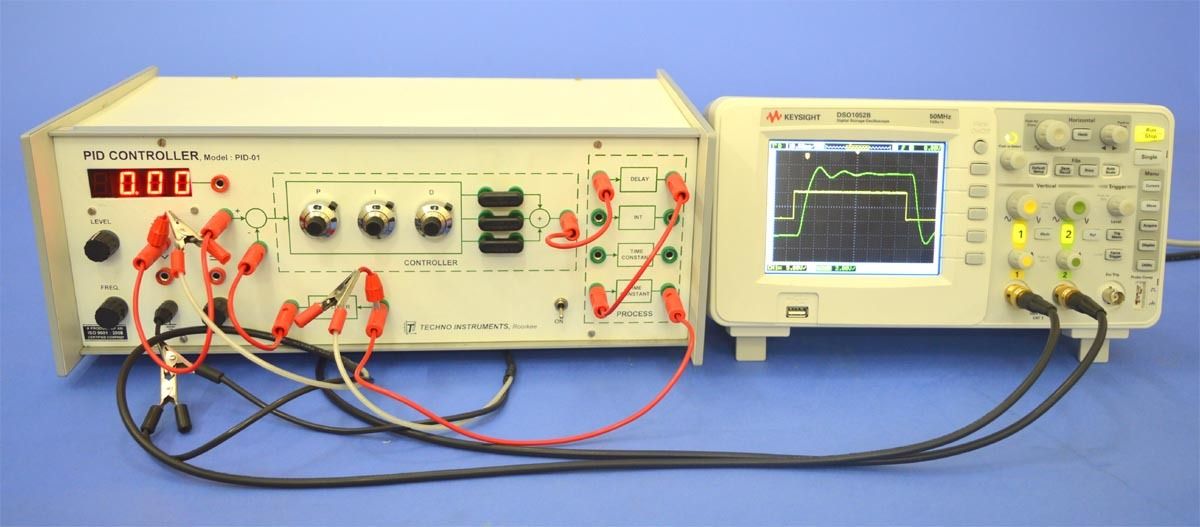
PID Controller (PID-01)
Product Details:
- Usage Control Laboratory Experiment
- Color Grey
- Weight 20 Kg Kilograms (kg)
- Application Control Laboratory Experiment
- Material Electronics
- Type Control Lab Trainer
- Display Type Digital
- Click to View more
PID Controller (PID-01) Price And Quantity
- 1 , , Piece
PID Controller (PID-01) Product Specifications
- Digital
- Control Laboratory Experiment
- Control Lab Trainer
- Grey
- 20 Kg Kilograms (kg)
- Electronics
- Control Laboratory Experiment
PID Controller (PID-01) Trade Information
- Cash Against Delivery (CAD), Cash on Delivery (COD), Delivery Point (DP), Telegraphic Transfer (T/T), Cash in Advance (CID), Cheque, Cash Advance (CA)
- 100 , , Piece Per Month
- 1 Week
- Contact us for information regarding our sample policy
- Complete in all respect
- Asia, Australia, Central America, North America, South America, Eastern Europe, Western Europe, Middle East, Africa
- All India
- ISO 9001: 2015 CE
Product Description
By utilizing years of industrial experience and deep knowledge, we are offering a distinguished array of PID Controller (PID-01) from Roorkee, Uttarakhand, India. This innovative and versatile equipment is actually a lab controller that consists of simulated building blocks like error detector, dead time, integrator and time constants, which may be configured into a variety of systems. The offered range is provided in various specifications as per demanded by our clients. Before the final delivery, we perform a series of practical tests.
Highlights:-
* PID-action study on CRO
* Simulated blocks for flexible system
* Time delay (transportation lag) block
* Synchronised square and triangular source for flicker free display
Experiments
* Open loop response of various process configurations (10 in all)
* Study of closed loop response for above
* P, PI, PD and PID design and performance evaluation in each case
Features and Specifications:
# Simulated blocks dead time (transportation lag), integrator, time constants, error detector and gain
# PID Controller (configurable as P, PI, PD or PID)
# Prop. Band: 5% to 50% (Gain 2-20)
# Integral time: 10msec - 100msec
# Derivative time: 2-20msec
# Built-in signal sources
# Set value: -1V to +1V
# Square wave: 1V p-p (min.) at 40Hz (typical)
# Triangular wave: 1V p-p (min.) at 40Hz (typical)
# Built-in 3 digit DVM for d.c. measurements
# Built-in IC regulated power supply
# Detailed literature and patch chords included
# Essential accessory a CRO
Advanced Laboratory Control Precision
This PID Controller (PID-01) enhances laboratory experiments by enabling accurate process control. Its real-time digital display allows users to monitor and adjust variables efficiently during control laboratory experiments. Reliable and easy to operate, the trainer supports practical learning and advanced training in control systems.
Customizable for Diverse Experimental Requirements
The controller is available in 8 kg and 20 kg weights, providing flexibility for different laboratory setups and experiment scales. Its compact and robust design ensures stability and longevity, making it suitable for repeated use in academic and research laboratories.
FAQs of PID Controller (PID-01):
Q: How is the PID Controller (PID-01) used in control laboratory experiments?
A: The PID Controller (PID-01) is utilized to manage and regulate variables like temperature, pressure, or flow in laboratory experiments. Students and researchers can observe the system response in real time and adjust control parameters using the digital display to achieve desired results.Q: What benefits does the PID Controller offer for laboratory instruments?
A: This controller enhances precision and reliability in laboratory instruments. Its digital display allows for accurate monitoring, ensuring consistent and repeatable control in experiments, which is essential for research and educational purposes.Q: When should the PID Controller (PID-01) be integrated into a lab setup?
A: The PID Controller should be used whenever process control is required in laboratory experiments, particularly in control engineering courses, instrumentation labs, and research projects where maintaining process parameters within tight tolerances is critical.Q: Where is the PID Controller (PID-01) manufactured and supplied from?
A: The PID Controller is manufactured, exported, and supplied by leading providers in India, ensuring rapid availability and support for customers across educational and industrial sectors.Q: What is the process for setting up the PID Controller in an experiment?
A: To set up the PID Controller, users connect it to the laboratory instrument or experimental apparatus. They then configure the digital display settings according to the desired control parameters, calibrate as needed, and begin monitoring and adjusting the process in real time.Q: How does the weight variant (8 kg or 20 kg) affect usage?
A: The availability of 8 kg and 20 kg models allows users to select the appropriate unit based on space constraints and specific experimental requirements. The heavier unit may offer greater stability for larger setups, while the lighter version is suitable for smaller labs or portable applications.
Price:
- 50
- 100
- 200
- 250
- 500
- 1000+

Other Products in 'Control Laboratory Experiments' category



- Building 452, Adarsh Nagar,Roorkee - 247667, Uttarakhand, India
- Phone : 07313725920

- Mr Ravi Prakash (Director)
- Mobile :07313725920
- Send Inquiry
- Landline : 91-1332-277118/ 272852
Direct No. :+919837072750
 Send Inquiry
 Send Inquiry
 Send SMS
 Call Me Free
Developed and Managed by Infocom Network Private Limited.

