 English
 Spanish
 French
 German
 Italian
 Chinese (Simplified)
 Japanese
 Korean
 Arabic
 Portuguese
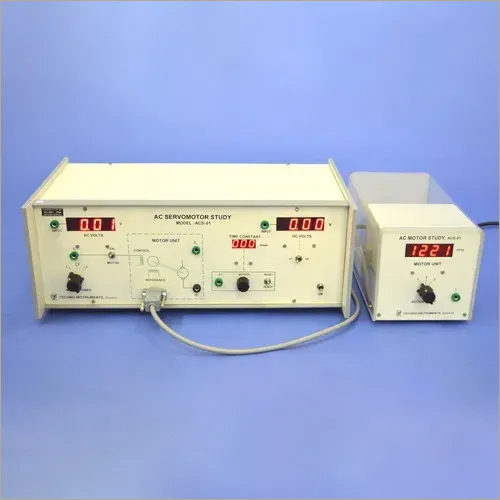
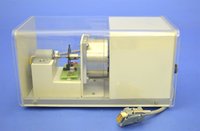
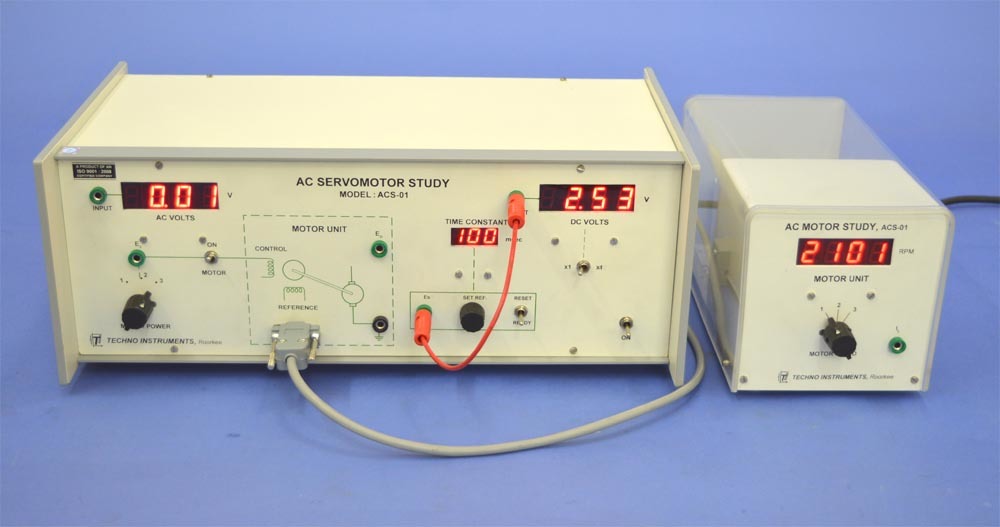
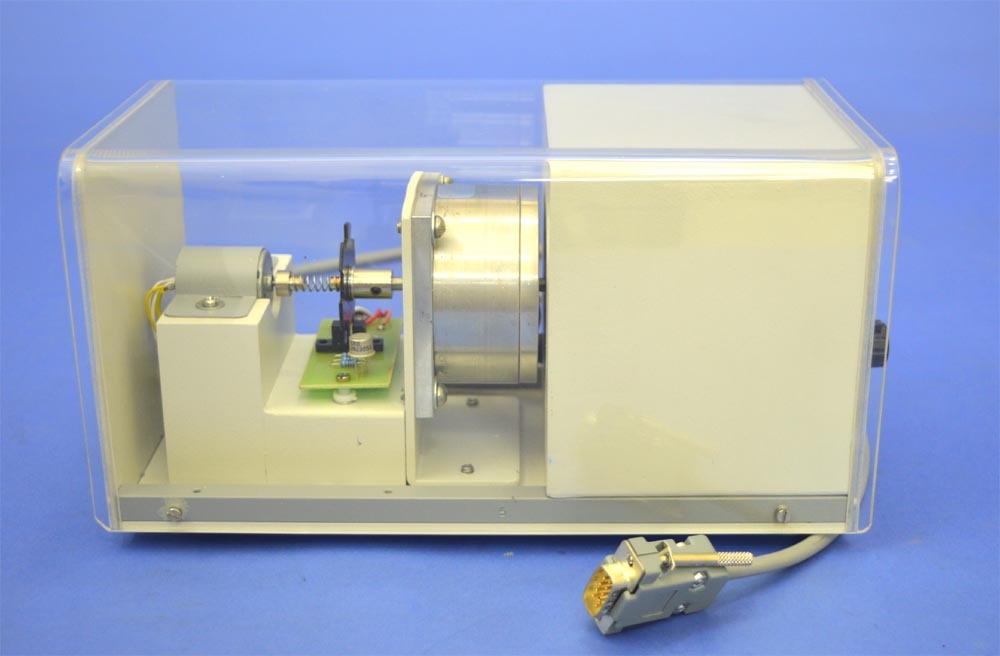
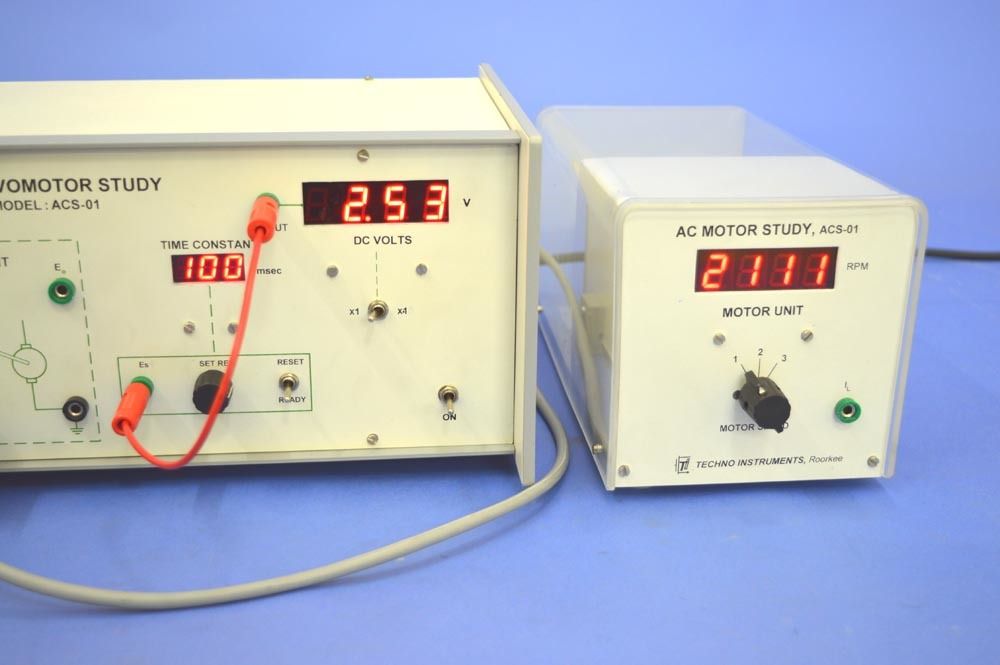
AC Servo Motor Study, ACS-01
Product Details:
- Application Control Laboratory Experiment
- Usage Control Laboratory Experiment
- Material Electronics
- Weight 20 Kg Kilograms (kg)
- Color Grey
- Type Control Lab Trainer
- Display Type Digital
- Click to View more
AC Servo Motor Study, ACS-01 Price And Quantity
- 1 , , Set
AC Servo Motor Study, ACS-01 Product Specifications
- Grey
- 20 Kg Kilograms (kg)
- Electronics
- Control Laboratory Experiment
- Control Lab Trainer
- Digital
- Control Laboratory Experiment
AC Servo Motor Study, ACS-01 Trade Information
- Cash Against Delivery (CAD), Cash on Delivery (COD), Cash Advance (CA), Cash in Advance (CID), Cheque, Delivery Point (DP), Telegraphic Transfer (T/T)
- 100 , , Set Per Month
- 1 Week
- Contact us for information regarding our sample policy
- Complete in all respect
- Western Europe, Asia, Australia, South America, Eastern Europe, Middle East, Africa, Central America, North America
- All India
- ISO 9001 : 2015 CE
Product Description
We are professionally engaged as manufacturer, supplier and exporter of AC Servo Motor Study in Roorkee, Uttarakhand, India.
* Torque computation through electrical loading
* Determination of motor parameters - inertia and friction
* Digital display of time constant
* Transfer function evaluation
Two phase a.c. servomotor is one of the very important electromechanical actuators having applications in the area of control systems. The study of its operating principle and features form a part of the first course on automatic control systems in electrical engineering curriculum. It's small size, low inertia and almost noise and frictionless operation makes the a.c. servomotor particularly attractive in aircraft and spacecraft applications.
The characteristics of an a.c. motor is usually non-linear. To simplify the analysis a linearized model is developed. The experimental work rev-olves around determination of the parameters of the motor and thus its transfer function.
Important subsystems of the unit includes,
(a) an integrated speed sensor with 4-digit display in r.p.m.
(b) an electrical loading system to compute torque
(c) a time-constant measurement circuit with 3-digit display in milli seconds
(d) a three step a.c. source with built-in r.m.s. voltmeter, and
(e) a digital voltmeter on the panel for load measurement
Precision Training for Control Systems
ACS-01 offers hands-on experience in servo motor control and dynamics, making it indispensable for laboratory-based learning. By simulating real-world scenarios, users can understand feedback mechanisms crucial for automation and robotics. Its digital display ensures accuracy throughout experiments, reinforcing theoretical concepts with practical applications.
Robust and User-Friendly Design
With a sturdy build and reliable electronic components, ACS-01 guarantees longevity and consistent performance in control labs. Its grey color and compact form allow for seamless integration into laboratory environments. The digital display simplifies monitoring, and its protected casing ensures safe operation during intensive usage.
FAQ's of AC Servo Motor Study, ACS-01:
Q: How is the ACS-01 AC Servo Motor Study utilized in control laboratory experiments?
A: The ACS-01 serves as a comprehensive trainer in control laboratory settings, helping users explore principles of motor control, feedback loops, and system response. It allows students and researchers to simulate, test, and analyze various control strategies in a controlled environment.Q: What are the main benefits of using ACS-01 in laboratory instruments?
A: ACS-01 enhances learning by providing accurate real-time data through its digital display, enabling precise experimentation and analysis. Its durable construction supports repeated usage, while its advanced features foster deeper understanding of servo mechanisms and system optimization.Q: When should the ACS-01 be incorporated into laboratory training programs?
A: ACS-01 is best integrated at stages requiring practical demonstration of control concepts, such as during feedback control modules or project-based learning in advanced laboratory courses. It's ideal for both introductory and specialized studies in control engineering.Q: Where is the ACS-01 manufactured and supplied from?
A: ACS-01 is exported, manufactured, and supplied by leading electronics education equipment providers in India. It is available through exporters, manufacturers, and suppliers who specialize in laboratory instruments for educational institutions.Q: What is the process for setting up the ACS-01 for laboratory use?
A: Setting up ACS-01 involves positioning the device in a secure lab environment, connecting it to relevant controllers and instruments, and calibrating the digital display as per experiment requirements. The trainer's user-friendly interface simplifies installation and operation.Q: How does using ACS-01 benefit control laboratory experiments?
A: By enabling accurate measurement and controlled experimentation, ACS-01 helps users develop analytical skills and practical expertise in control engineering. Its advanced digital monitoring features improve the reliability of experimental outcomes, supporting both teaching and research objectives.
Price:
- 50
- 100
- 200
- 250
- 500
- 1000+

Other Products in 'Control Laboratory Experiments' category




- Building 452, Adarsh Nagar,Roorkee - 247667, Uttarakhand, India
- Phone : 07313725920

- Mr Ravi Prakash (Director)
- Mobile :07313725920
- Send Inquiry
- Landline : 91-1332-277118/ 272852
Direct No. :+919837072750
 Send Inquiry
 Send Inquiry
 Send SMS
 Call Me Free
Developed and Managed by Infocom Network Private Limited.

