 English
 Spanish
 French
 German
 Italian
 Chinese (Simplified)
 Japanese
 Korean
 Arabic
 Portuguese
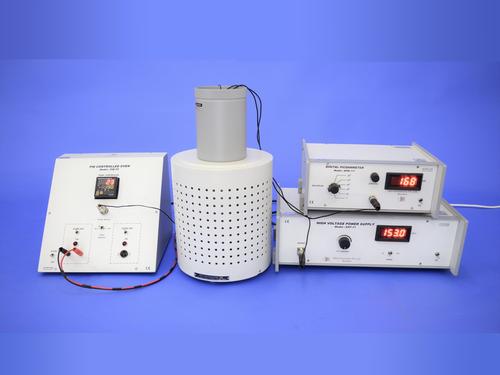
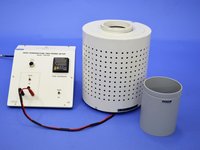
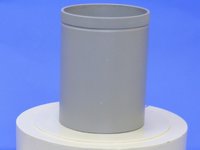
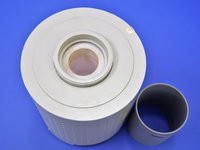
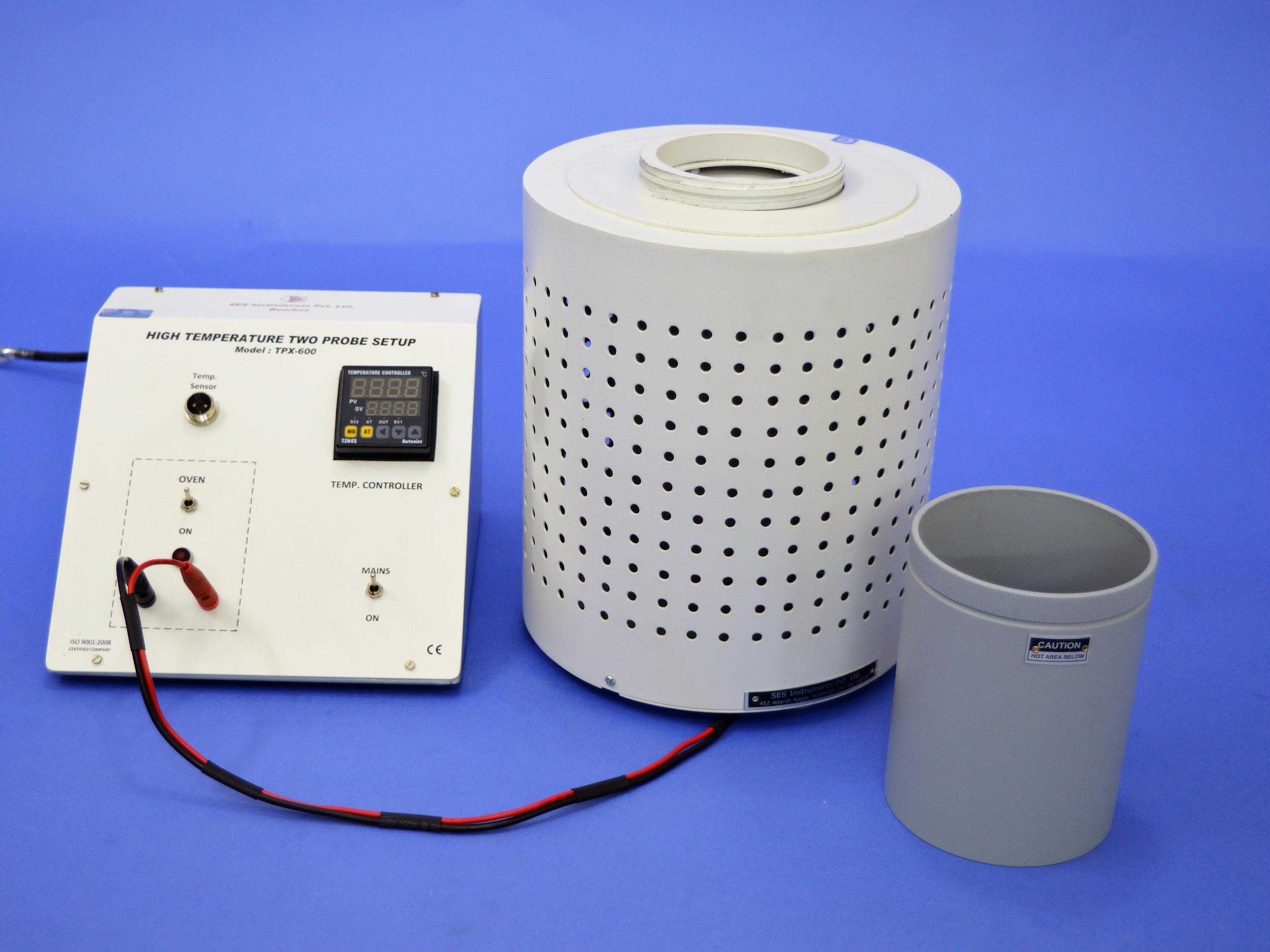
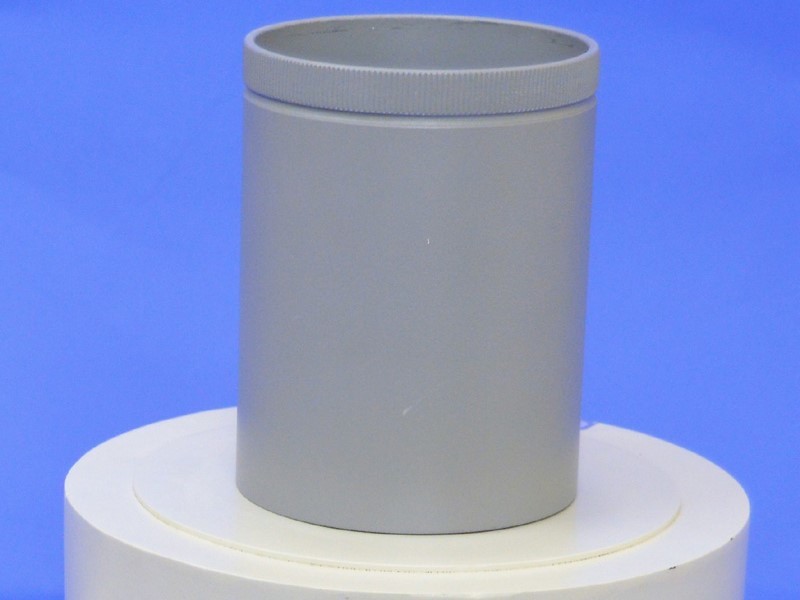
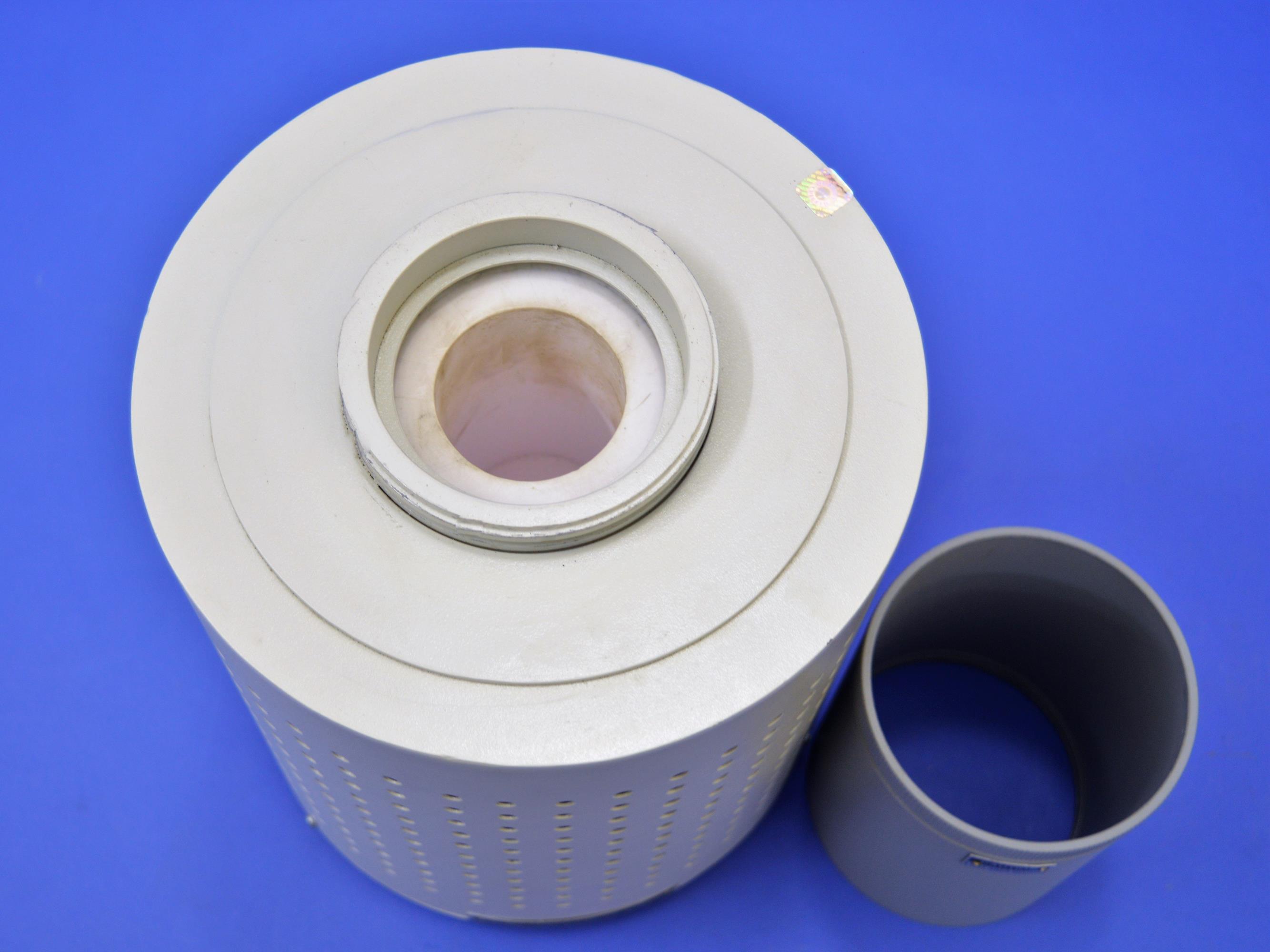
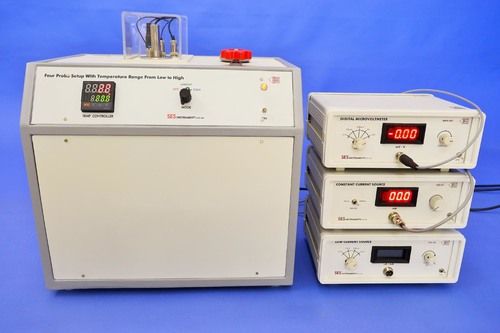
High Temperature Two Probe Set-up, TPX-600N
Product Details:
- Weight 25 Kg Kilograms (kg)
- Application Laboratory Experiment
- Material Electronics
- Usage Laboratory Experiment
- Color Grey
- Display Type Digital
- Click to View more
High Temperature Two Probe Set-up, TPX-600N Price And Quantity
- 1 Set
High Temperature Two Probe Set-up, TPX-600N Product Specifications
- Laboratory Experiment
- 25 Kg Kilograms (kg)
- Digital
- Grey
- Laboratory Experiment
- Electronics
High Temperature Two Probe Set-up, TPX-600N Trade Information
- Cash Against Delivery (CAD), Cash on Delivery (COD), Cash Advance (CA), Cash in Advance (CID), Cheque, Delivery Point (DP), Telegraphic Transfer (T/T)
- 100 Set Per Month
- 1 Week
- Contact us for information regarding our sample policy
- Complete in all respect
- Western Europe, Australia, North America, South America, Eastern Europe, Middle East, Central America, Asia, Africa
- All India
- ISO 9001: 2015 CE
Product Description
Two Probe Method For Resistivity Measurement of Near Insulators at Different Temperatures (Ambient to 600oC)
DESCRIPTION
Behaviour of resistivity of substarte such as polymer sheets/ films at higher temperatures is an important area of investigation due to their variety of applications. Two Probe Method is one of the standard and most commonly used method for the measurement of resistivity of very high resistivity samples like sheets/films of polymers. The resistivity measurement of such samples is beyond the range of Four Probe Method.
DESCRIPTION OF THE EXPERIMENTAL SET-UP
1. Two Probes Arrangement
It has two individually spring loaded probes. The probes arrangement is mounted in a suitable stand of high quality alumina which also holds the sample plate. To ensure the correct measurement of sample temperature, the thermocouple junction is embedded in the sample plate just below the sample. This stand also serves as the lid of temperature controlled oven. Proper leads are provided for connection to Capacitance Meter and Temperature Controller.
2. High Temperature Oven
This is a high quality temperature controlled oven. The heating element used is a high grade Kanthal-D. It is mounted on a custom made groved, sintered alumina fixture to avoid any slippage of heating wire. Heat shield is also provided to reduce the excessive heating of outer cover. Further the top portion is also suitably covered to meet the safety standard. The oven has been designed for fast heating and cooling rates, which enhances the effectiveness of the controller.
3. PID Temperature Controller
It is a high quality PID controller where the temperatures can be set and controlled easily. P, I and D can be adjusted by the user and can also be kept on Auto-tuning.
4. High Voltage Power Supply, Model EHT-11
Specifications as per datasheet attached
5. Digital Picoammeter, Model DPM-111
Specifications as per datasheet attached
The experimental set-up is complete in all respect
Precision Measurement for Research
The High Temperature Two Probe Set-up, TPX-600N, is tailored for laboratories requiring precise electrical measurement at high temperatures. Its digital display and rugged design support a range of research activities, ensuring high accuracy and repeatability. This instrument is especially useful in material science, semiconductor studies, and conductivity experiments.
Robust Construction, User-Friendly Design
Weighing 25 kg or 35 kg, the TPX-600N is engineered for durability and ease of use. The grey electronic body resists wear from high-temperature environments common in laboratory settings. Its digital interface presents results clearly, while its ergonomic build makes it convenient for regular laboratory usage.
FAQ's of High Temperature Two Probe Set-up, TPX-600N:
Q: How is the High Temperature Two Probe Set-up, TPX-600N typically used in laboratory experiments?
A: The TPX-600N is used for measuring electrical resistance or conductivity of materials at elevated temperatures. Researchers place their sample between the two probes, then apply current while the digital interface displays accurate readings, enabling precise characterization of sample properties.Q: What materials is the TPX-600N made from, and why is this important?
A: The TPX-600N is constructed from high-grade electronics encased in a robust housing. This selection of materials ensures the instrument remains reliable and stable even under the intense conditions present during high-temperature laboratory experiments.Q: When is the TPX-600N preferred over other measurement methods?
A: This two probe set-up is preferred when high accuracy is needed in characterizing the electrical properties of materials at elevated temperatures. Its design makes it suitable for both academic research and industrial applications where temperature-dependent data is crucial.Q: Where can the TPX-600N be sourced from?
A: The TPX-600N is manufactured, exported, and supplied from India by specialized laboratory equipment manufacturers. Interested users can contact authorized exporters and suppliers to acquire the set-up for their laboratories.Q: What is the process of conducting an experiment with the TPX-600N?
A: The typical process involves placing the material sample between two probes, setting the desired temperature, and initiating measurements. The digital display then provides real-time data, which researchers can analyze for their experimental requirements.Q: What benefits does the TPX-600N provide to laboratory experiments?
A: This set-up allows for reliable, repeatable, and high-precision electrical measurements under controlled high-temperature conditions. Its user-friendly interface and sturdy design enhance efficiency and reduce experimental errors.
Price:
- 50
- 100
- 200
- 250
- 500
- 1000+

Other Products in 'Physics & Material Sc. Lab Experiments' category



- Building 452, Adarsh Nagar,Roorkee - 247667, Uttarakhand, India
- Phone : 07313725920

- Mr Ravi Prakash (Director)
- Mobile :07313725920
- Send Inquiry
- Landline : 91-1332-277118/ 272852
Direct No. :+919837072750
 Send Inquiry
 Send Inquiry
 Send SMS
 Call Me Free
Developed and Managed by Infocom Network Private Limited.

