 English
 Spanish
 French
 German
 Italian
 Chinese (Simplified)
 Japanese
 Korean
 Arabic
 Portuguese
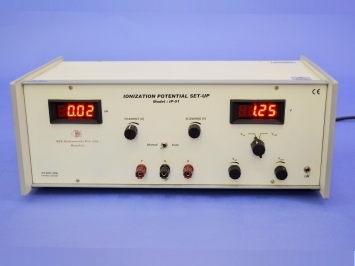
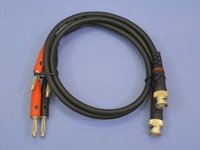
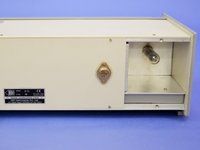

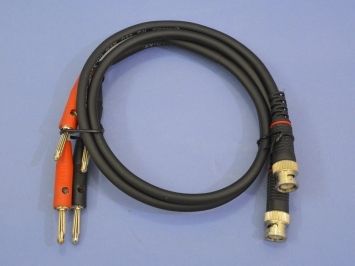
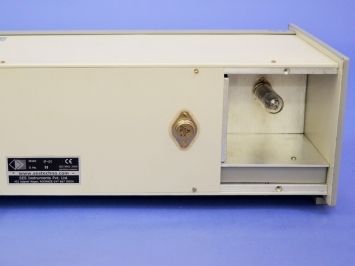
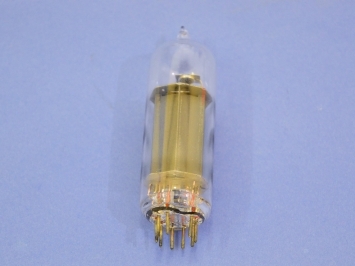
Ionization Potential Set Up, IP-01
Product Details:
- Weight 20 Kg Kilograms (kg)
- Color Grey
- Application Laboratory Experiment
- Material Electronics
- Usage Laboratory Experiment
- Display Type Digital
- Click to View more
Ionization Potential Set Up, IP-01 Price And Quantity
- 1 , , Piece
Ionization Potential Set Up, IP-01 Product Specifications
- Laboratory Experiment
- Electronics
- Laboratory Experiment
- Grey
- 20 Kg Kilograms (kg)
- Digital
Ionization Potential Set Up, IP-01 Trade Information
- Cash Against Delivery (CAD), Cash on Delivery (COD), Cash Advance (CA), Cash in Advance (CID), Cheque, Delivery Point (DP), Telegraphic Transfer (T/T)
- 100 , , Piece Per Month
- 1 Week
- Contact us for information regarding our sample policy
- Complete in all respect
- South America, Western Europe, Middle East, Asia, Central America, Eastern Europe, North America, Australia, Africa
- All India
- ISO 9001: 2015 CE
Product Description
We are highly preferred and major manufacturer, supplier and exporter of Ionization Potential Set Up in Roorkee, Uttarakhand, India. The electrons in the atomshave discrete stationary states.Franck and Hertz in 1914 described the first observation of quantized excitation from one quantized state to another one year after N. Bohr published his theory of hydrogen atom. His method depends on detecting the on-set of inelastic collisions between electrons and atoms of the gas under study.
The experimental tube in this measurement is essentially a triode filled with the vapour of the experimental substance. The electrons emitted by the heated filament of the tube are accelerated by the positive potential VGK between the cathode and the grid. The grid is a wire mesh which allows the electrons to pass through. The anode A is maintained at a fixed potential VGA slightly negative with respect to the grid. In the experiment the electron current is measured as a function of the voltage VGK. As VGK increases, the energy of the electrons increases, and more and more electrons reach the anode. The anode current increases. The collisions between the electrons and the atoms are elastic. As VGK further increases, the energy of the electrons reaches the threshold for the excitation of the atomic electrons from the ground state to the first excited state, and the collisions between the electrons and the atoms become inelastic.
Digital Precision for Laboratory Research
Equipped with a digital display, the IP-01 delivers highly accurate measurements crucial for laboratory experiments. Its electronic construction guarantees stability, reliability, and consistent performance, allowing researchers to conduct sophisticated scientific analyses with confidence and ease.
Convenient Design and Versatile Application
Available in both 10 kg and 20 kg weights, and with a grey finish, the IP-01 accommodates diverse laboratory setups. Its robust build and specialized design make it suitable for demanding usage across educational, research, and industrial laboratory settings.
FAQ's of Ionization Potential Set Up, IP-01:
Q: How do I set up the Ionization Potential Set Up, IP-01 in my laboratory?
A: To set up the IP-01, place the instrument on a stable surface to support its weight (10 kg or 20 kg) and ensure the digital display is clearly visible. Connect the device to the designated power source according to the instructions provided, and follow the standard laboratory safety protocols for electronic apparatus.Q: What type of laboratory experiments is the IP-01 suitable for?
A: The IP-01 is specifically designed for ionization potential measurements, making it an ideal choice for experiments involving atomic and molecular ionization studies, physics demonstrations, and various analyses that require precise voltage readings in research environments.Q: When should the IP-01 be calibrated for best results?
A: We recommend calibrating the IP-01 before initial use and periodically as indicated in the user manual, particularly prior to conducting critical experiments, to ensure that all digital readings remain accurate and reliable over time.Q: Where can the IP-01 be sourced for laboratory use?
A: The IP-01 is available directly from our company as an exporter, manufacturer, and supplier in India. Contact us for order placement, product queries, and after-sales support to ensure seamless integration into your laboratory's experiments.Q: What is the process for using the digital display during experiments?
A: During experiments, the digital display allows real-time monitoring of ionization potential values. Simply follow the experiment protocol to conduct measurements and observe results on the screen, ensuring precise data collection and analysis.Q: What are the main benefits of using the IP-01 in laboratory experiments?
A: The IP-01 provides accurate, dependable ionization potential measurements, simplifies data monitoring via its digital display, and is built for durability and versatility. These features help researchers achieve consistent results and streamline laboratory workflows.
Price:
- 50
- 100
- 200
- 250
- 500
- 1000+

Other Products in 'Physics & Material Sc. Lab Experiments' category


- Building 452, Adarsh Nagar,Roorkee - 247667, Uttarakhand, India
- Phone : 07313725920

- Mr Ravi Prakash (Director)
- Mobile :07313725920
- Send Inquiry
- Landline : 91-1332-277118/ 272852
Direct No. :+919837072750
 Send Inquiry
 Send Inquiry
 Send SMS
 Call Me Free
Developed and Managed by Infocom Network Private Limited.

